
What Is DOOH Advertising and How Does It Work? A Complete Guide for Dubai Businesses
There is a term that has quietly moved from media buyer jargon into mainstream marketing conversations across the UAE. DOOH. If you have heard it and nodded along without being entirely sure what it means, or if you have a rough sense of the concept but want to understand how it actually functions and why brands in Dubai are paying serious attention to it, this guide is written specifically for you.
By the end of this article you will understand what DOOH advertising is, how it works technically and strategically, what the different types are, and why one specific category of it is quietly outperforming almost every other advertising format available to businesses operating in Dubai today.
What Does DOOH Stand For?
DOOH stands for Digital Out of Home advertising. It is the digital evolution of traditional out of home advertising, which is the broader category that includes anything placed in public or semi-public physical environments — billboards, transit displays, point of sale screens and any other brand communication that happens outside of a person’s home.
The “digital” distinction matters enormously. Traditional out of home advertising is static. A printed billboard stays the same for the duration of its booking. A DOOH screen can change content in real time, be updated remotely, deliver different messages at different times of day, and be part of a coordinated campaign managed from a single dashboard.
This shift from static to dynamic fundamentally changes what out of home advertising can do, who it can target, how it can be measured and what it costs to run effectively.
How DOOH Advertising Actually Works
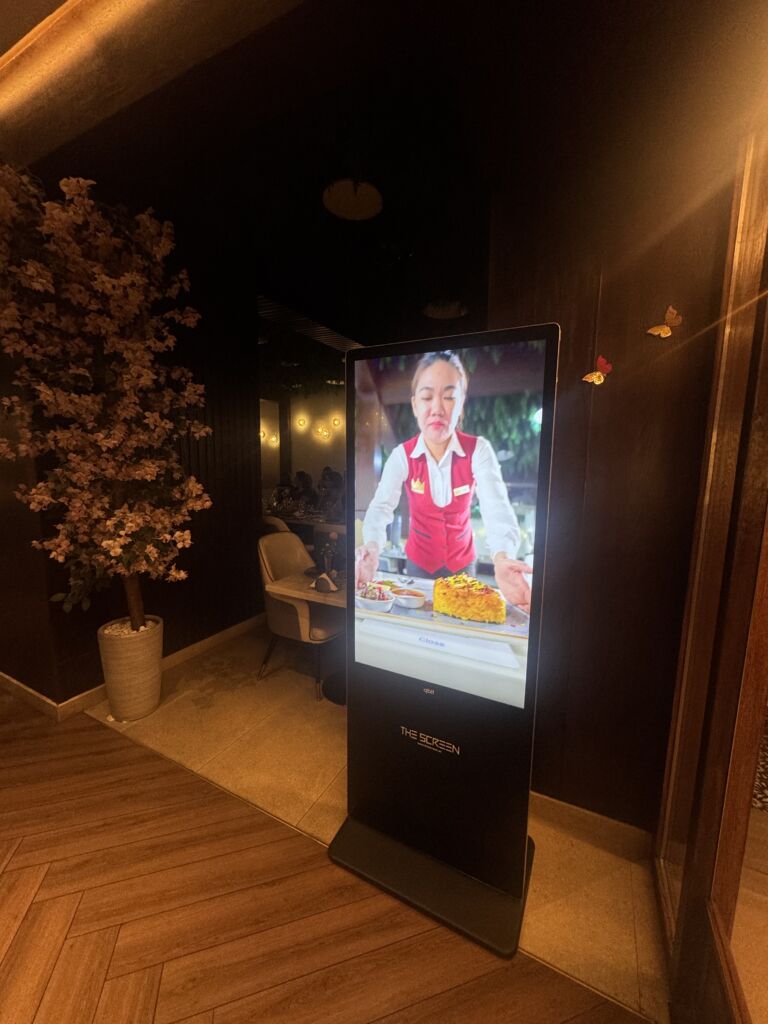
At its most basic level, DOOH advertising works through a network of digital screens connected to a central content management system. Advertisers upload creative assets, set scheduling parameters, and the content management system distributes and plays those assets across the relevant screens in the network.
In practice, modern DOOH operates through several layers.
The screen hardware itself ranges from large format LED displays on roadside structures to smaller commercial-grade screens installed inside venues. Each screen runs software that receives and plays content according to a schedule set by the network operator.
The content management system is the control layer. It allows operators to update content across an entire network instantly, schedule different ads for different times, manage multiple advertisers simultaneously and ensure each screen is functioning correctly. At TheScreen.ae, this is how we manage screens across our entire venue network — every update, scheduling change and content rotation is handled through our central system so advertisers never need to touch anything after submitting their creative.
Above the content management layer sits the audience layer. This is where DOOH becomes genuinely sophisticated. Different screens in a network reach different audience profiles. A screen inside a medical clinic reaches a very different person from a screen inside a gym or a salon. Understanding this audience layer is what separates effective DOOH campaigns from ones that simply run content without strategic purpose.
The Main Types of DOOH Advertising
Understanding the types of DOOH advertising available in Dubai helps clarify which format is appropriate for which business objective.
Roadside and Highway DOOH. These are the large format digital screens placed along major roads including Sheikh Zayed Road, Al Khail Road and key commercial corridors across the emirate. They offer high reach and brand visibility, particularly for campaigns requiring mass awareness. Dwell time per impression is short, typically two to five seconds, which limits their effectiveness for messages that require processing or consideration.
Transit and Transport DOOH. Digital screens placed within Dubai Metro stations, bus shelters and airport environments. These formats reach audiences while they are waiting or in transit, giving slightly higher dwell times than highway formats but still within a distracted, semi-mobile context.
Retail and Point of Sale DOOH. Screens placed inside shopping malls, near checkout areas or within retail environments. These formats benefit from purchase intent proximity — the viewer is already in a buying context — which increases their relevance for certain retail and consumer product categories.
Indoor Venue DOOH. This is the category that is growing fastest in Dubai, and for very good reason. Indoor venue DOOH refers to screens placed inside specific types of venues — medical clinics, gyms, salons, cafés, restaurants and other spaces where visitors arrive, sit down and stay for an extended period.
The defining characteristic of indoor venue DOOH is dwell time. While a roadside screen might have two seconds of genuine attention, a screen inside a medical clinic waiting room has fifteen to forty five minutes with the same person. A screen inside a gym or fitness center runs throughout a workout session. A screen inside a salon sits at eye level while a client is physically unable to leave for thirty to ninety minutes.
This dwell time differential is not marginal. It is the most significant variable in advertising effectiveness, and it is what makes indoor venue DOOH a fundamentally different product from every other format in the DOOH category.
What Is Programmatic DOOH?
Programmatic DOOH is a more advanced layer of the technology that allows advertisers to buy screen time through automated platforms rather than through direct negotiation with network operators. In programmatic DOOH, advertisers set targeting criteria, bid parameters and budget limits, and the system matches their ads to available screen inventory across multiple networks in real time.
While programmatic DOOH is an important development for large scale national and international campaigns, it is worth understanding that for most businesses in Dubai, the more important question is not how the screen time is purchased but whether the screen environment itself is reaching the right audience in the right state of mind.
A small business running a campaign inside salons and beauty centers does not need a programmatic platform to reach its target audience effectively. It needs the right screen, in the right venue, with content that resonates. The managed network model handles this more efficiently for most local and regional advertisers than a programmatic auction would.
Why Dubai Is One of the Most Important DOOH Markets in the World
Dubai occupies a genuinely unusual position in the global DOOH landscape. The emirate combines extremely high urbanisation, a dense concentration of high income residents and visitors, world class physical infrastructure, and a regulatory environment that supports modern out of home advertising development.
The UAE out of home advertising market has grown consistently over the past several years, driven by population growth in key districts, the expansion of commercial real estate and the increasing sophistication of local advertisers who are demanding more accountable, measurable media formats.
Within this environment, indoor venue DOOH is growing faster than any other segment. The concentration of premium medical facilities, fitness centers, beauty venues and hospitality in areas like Business Bay, Jumeirah Village Circle, Dubai Marina, Jumeirah and Downtown Dubai creates a venue network with extraordinary audience quality across a compact and highly accessible geographic area.
For brands operating in health, wellness, insurance, food and beverage, retail and personal care, this venue concentration means that a relatively small screen network can reach an extraordinarily relevant and qualified audience consistently.
What Makes DOOH Different from Digital Advertising on Phones and Computers
A question that comes up frequently among Dubai advertisers who are evaluating their media mix is how DOOH compares to digital advertising on social media platforms, search engines and other online channels.
The core distinction is context and control. Online digital advertising competes for attention against an almost infinite supply of alternative content. The person you are trying to reach has a feed full of content they actively chose, notifications they are waiting for and entertainment they are engaged with. Your ad is, by definition, an interruption they can skip, scroll past or simply tune out.
DOOH advertising, particularly indoor venue DOOH, does not compete with content the viewer is engaged with. The screen is often the only screen in the environment. The venue visitor is not scrolling. They are present in a physical space with limited alternatives for where to direct their attention.
This is not a subtle psychological advantage. It is the fundamental structural difference between the two formats, and it explains why brands that have experimented with indoor venue advertising frequently find their investment going further than equivalent digital spend online.
How to Evaluate Whether DOOH Advertising Is Right for Your Business in Dubai
The simplest evaluation framework for any Dubai business considering DOOH advertising is audience alignment.
Start by asking where your target customers physically are when they are most receptive to your category of product or service. If they visit medical facilities, the indoor screen network inside Dubai clinics puts your brand in front of them at exactly that moment. If they are active and health focused, fitness center screens reach them during a workout. If they value personal presentation, salon screens reach them during an appointment they booked because they already care about how they look.
If this alignment exists between your audience and any category of venue in our network, DOOH advertising is almost certainly more efficient for reaching that audience than any broad reach format competing for general attention.
To see how a campaign would work for your specific business and audience, explore what TheScreen.ae offers for advertisers and get in touch with our team in Business Bay, Dubai.
Frequently Asked Questions
What is the difference between OOH and DOOH advertising?
Out of home advertising (OOH) refers to any advertising format placed in public physical environments, including static printed billboards and posters. Digital out of home advertising (DOOH) refers specifically to digital screen-based formats within that same physical environment. DOOH enables dynamic content, real-time updates, scheduling flexibility and more precise audience targeting than static OOH.
Is DOOH advertising expensive for small businesses in Dubai?
The cost of DOOH advertising varies significantly by format and network. Large roadside digital billboards on prime Dubai routes carry premium pricing. Indoor venue DOOH networks, particularly managed networks like TheScreen.ae, typically offer more accessible entry points that suit businesses of varying sizes, including local SMEs.
How is DOOH advertising measured?
DOOH measurement typically relies on venue footfall data, dwell time estimates and in some cases sensor-based or camera-based audience counting tools. Indoor venue DOOH offers particularly strong measurement foundations because venue operators have reliable data on how many people visit, when they visit and how long they typically stay.
What kind of creative works best for DOOH screens?
For indoor venue DOOH, the most effective creative tends to be visually clear, contextually relevant to the venue and designed for a viewer who has time to read and absorb a fuller message. Unlike highway formats where the creative must communicate in under three seconds, indoor venue screens give advertisers the luxury of a longer, more detailed brand story.
How quickly can a DOOH campaign go live in Dubai?
This depends on the network and the campaign scope. With a managed network like TheScreen.ae, once creative is approved and campaign details confirmed, the timeline from agreement to live screen is typically very short. The managed model means the advertiser does not need to handle any technical elements themselves.