If you’ve spent any time getting quotes for digital advertising screens in Dubai, you’ve probably had a provider throw around terms like LED, LCD, programmatic, and static rotation as if you already know what they mean.
Most people booking their first campaign don’t, and there’s no reason they should — this is media-industry shorthand, not general knowledge. Here is what each term actually refers to, and more importantly, which of them should influence your decision.
LCD: The Workhorse of Indoor Advertising
LCD stands for liquid crystal display, and it’s the technology behind most of the screens you’ll see inside clinics, gyms, salons, cafés, and retail stores across Dubai.
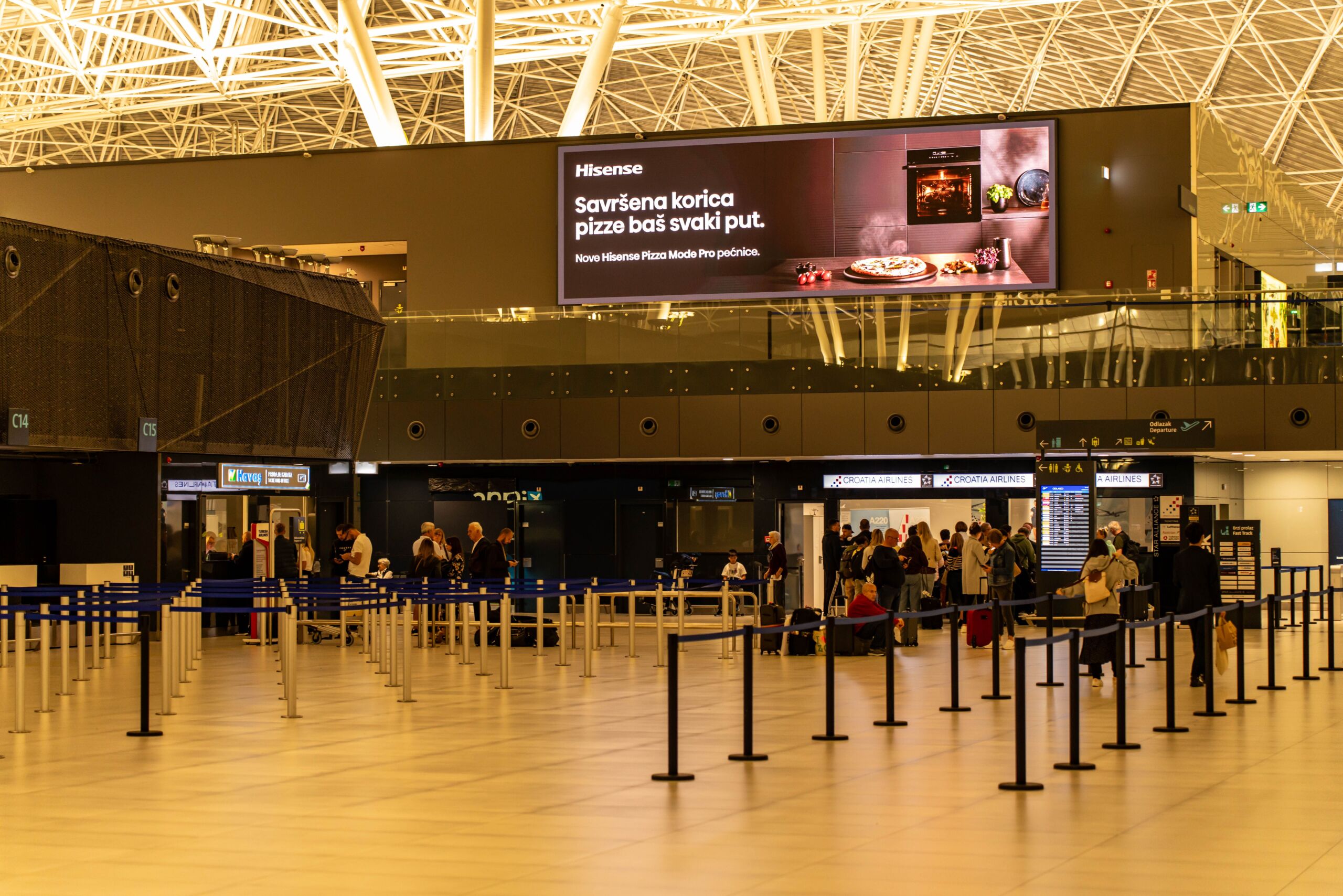
It’s relatively inexpensive to install, produces crisp detail at close range, and doesn’t need to fight against direct sunlight, since indoor lighting is controlled. That combination is exactly why it’s the default choice for smaller, enclosed-space advertising.
LED: Built When Scale and Sunlight Are the Problem
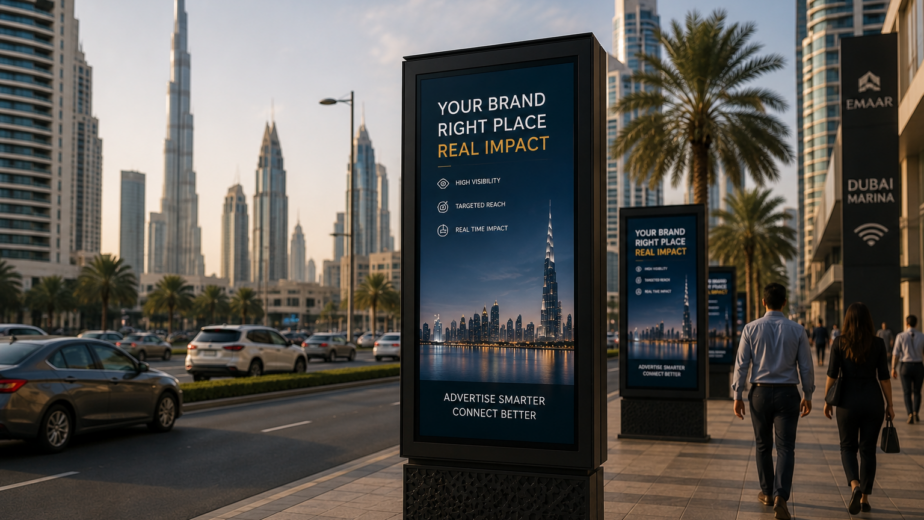
LED, or light-emitting diode, screens are what you’re looking at when you see a giant roadside billboard, a mall atrium display, or stadium-scale signage.
Because LED screens are built from individually lit modules, they can be manufactured at almost any size and stay bright enough to read in full daylight—which LCD panels generally can’t manage outdoors. That capability comes at a real cost: LED installations require far more investment than LCD, which is why they show up on high-traffic corridors like Sheikh Zayed Road rather than a single café counter.
Indoor vs. Outdoor Actually Matters More Than Hardware
Here’s the part most people miss: the technology label matters less for your campaign than whether the screen is indoor or outdoor.
| Feature | Indoor LCD Screens | Outdoor LED Billboards |
| Viewer Dwell Time | High (Minutes in salon, gym, clinic) | Low (Seconds while driving/walking) |
| Lighting Context | Controlled indoor ambient light | Direct Sunlight / Weather Exposure |
| Primary Advantage | High clarity, long engagement | Mass reach, citywide scale |
| Typical Use Case | Targeted venue messaging | Broad brand awareness campaigns |
Indoor screens hold a stationary, captive audience for minutes at a time—someone in a salon chair or clinic waiting room isn’t going anywhere. Outdoor screens reach far more people, but for a few distracted seconds each, competing with traffic, weather, and movement.
Neither format is objectively superior; they solve different problems. Understanding how DOOH advertising works and building your strategy around where your customer actually spends time matters far more than which panel technology displays the ad.
Static, Dynamic, and Programmatic: Content Scheduling
A separate layer worth understanding: some screens run a fixed content loop on a set schedule, while others operate programmatically. Programmatic execution means ad slots can be bought and triggered dynamically—by time of day, weather, or audience data on more advanced networks.
Programmatic capability shows up far more often on large outdoor and mall networks than on smaller indoor venue screens, and it usually comes with a higher minimum spend and a more involved booking process than a straightforward fixed-loop placement.
Passive vs. Interactive: Two Different Jobs
Most advertising screens are passive—they simply display a loop, no viewer action required. Interactive touchscreens exist too, mostly for wayfinding or retail product lookup, and they’re doing a different job entirely: engagement, not exposure.
For a standard awareness or reach campaign, passive screens are the more cost-effective and appropriate choice. Interactive formats belong to experiential or retail-specific use cases, not general brand advertising.
Which Terms Should Guide Your Decision?
Ignore the technology label and start with your audience’s location:
-
Local & Venue-Based Audience: If your target customer frequents clinics, gyms, salons, or cafés, indoor LCD screens in the right venue network are usually the most cost-effective entry point.
-
Citywide Brand Awareness: If your goal is broad, high-volume visibility, outdoor LED displays offer the scale required for maximum reach.
Either way, learning how digital screen advertising campaigns are structured will tell you far more than any spec sheet.
Frequently Asked Questions
1. Is LED always better than LCD for advertising?
Not necessarily—LED is built for scale and outdoor sunlight, while LCD offers sharper close-range detail at a lower cost for indoor spaces. “Better” depends entirely on the environment and viewer distance.
2. Why is outdoor advertising more expensive than indoor?
Mainly because outdoor LED hardware, weatherproof enclosures, massive installations, and premium prime-road locations cost significantly more to build and lease than indoor venue setups.
3. What does “programmatic DOOH” actually mean?
It’s an automated way of buying screen ad space where ad slots trigger dynamically based on specific conditions—like time of day, live weather, or audience traffic—rather than a fixed manual booking loop.
4. Do I need video, or is a static image good enough?
Static images are cost-effective to produce and perform very well on high-speed outdoor screens. Video adds production cost but suits indoor venue screens where viewers have longer dwell times.
5. How do I decide which screen type fits my campaign?
Start with where your target customer spends attention, not the underlying panel technology. The venue, environment, and audience intent should drive the decision.
Ready to Plan Your Next Campaign?
Still unsure which format fits your brand and budget? Explore how to start a campaign with TheScreen or visit TheScreen homepage to get a customized venue and screen recommendation tailored to your goals.