When Your Brand Needs to Show Up in the Real World
There is a moment in every brand’s growth when the digital channels start to feel like they are not enough. The social media ads are running. The Google campaigns are live. And yet something is missing, that sense of real world presence, the feeling that your brand exists in the city as well as on a screen.
That feeling is not just vanity. It is a signal. Physical presence builds the kind of trust, familiarity, and credibility that digital advertising alone cannot fully create, no matter how precisely targeted it is. Consumers in Dubai, one of the most commercially sophisticated markets in the world, respond to brands that show up in their physical environment in ways that go beyond clicks and impressions.
This is what out of home advertising, commonly called OOH, has always understood. And in Dubai, where the built environment is both spectacular and constantly busy, the OOH advertising landscape offers more variety, more reach, and more strategic depth than almost any other city in the region.
At The Screen, we work across the full spectrum of OOH advertising in Dubai, from flagship mall campaigns to metro station networks, airport placements to community billboards. This guide is the complete picture of what is available, what it costs, and how to choose the options that will actually make a difference for your brand.
What OOH Advertising Actually Covers in Dubai
Out of home advertising refers to any paid advertising that reaches people while they are outside their homes, in public spaces, transit environments, retail destinations, or on the road. In Dubai, this includes a broader and more diverse range of environments than most advertisers initially realise.
The full OOH landscape in Dubai spans roadside billboards on major highways and community roads, digital and static screens inside malls and retail destinations, metro station and train advertising across the Red and Green lines, airport advertising across DXB terminals and Al Maktoum International, indoor screens in gyms, hotels, hospitals, offices, and cinemas, transit formats including bus shelters and taxi advertising, and large format building wraps and construction hoardings across the city’s constantly developing skyline.
The Best OOH Advertising Options in Dubai, Format by Format
Roadside Billboards and Unipoles
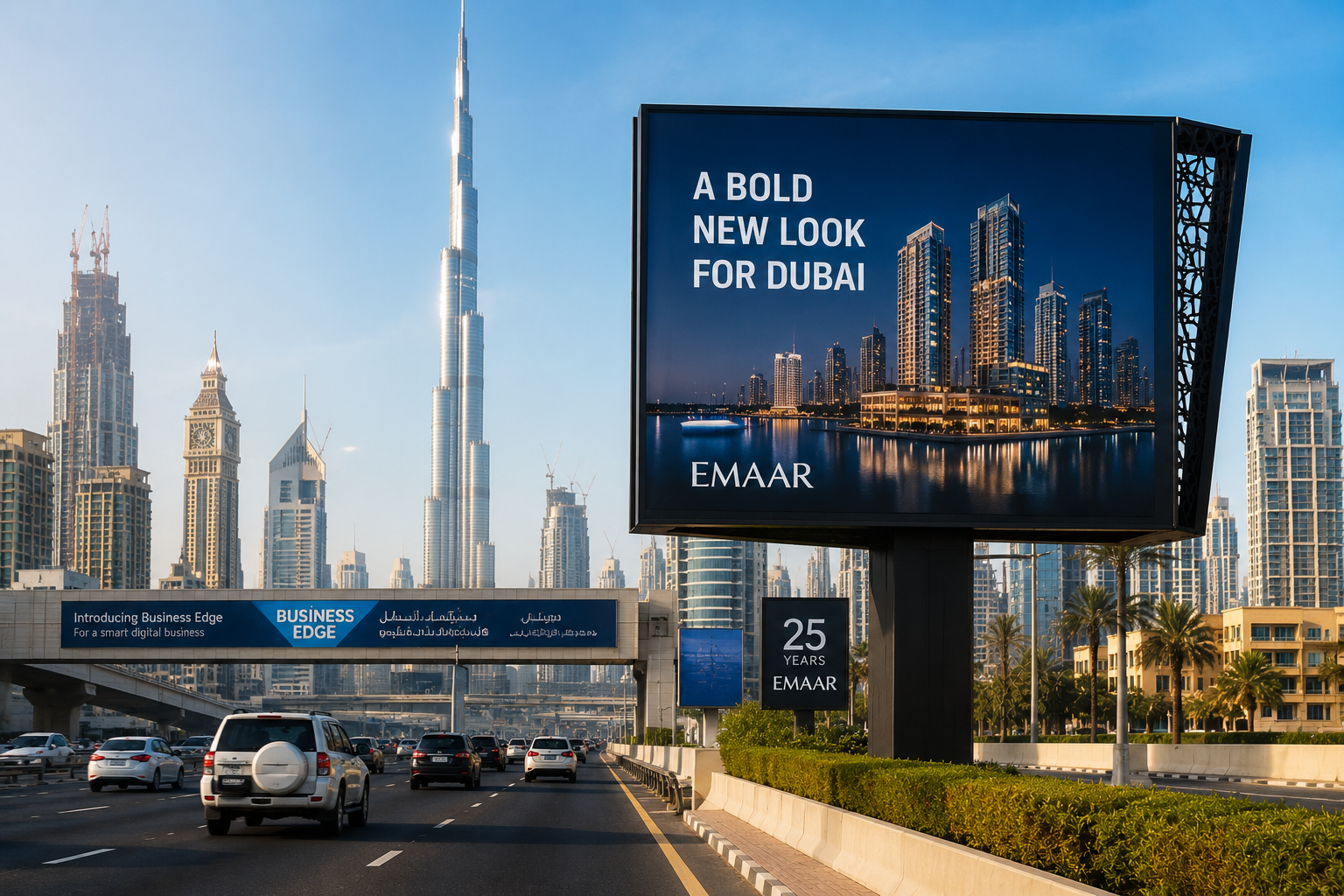
The most traditional and widely recognised form of OOH advertising, roadside billboards range from large format unipoles along Sheikh Zayed Road and Al Khail Road to smaller community panels in residential areas. They reach drivers and passengers across all demographics and work best for broad brand awareness and citywide visibility.
Sheikh Zayed Road remains Dubai’s most prestigious billboard corridor, with brands appearing here benefiting from both the volume of daily traffic and the credibility signal of being visible on the city’s most iconic road. For brands wanting that level of prestige, it commands a corresponding investment. For brands prioritising cost efficiency, secondary roads and community locations offer strong local reach at considerably more accessible rates.
Shopping malls are central to daily life in Dubai in a way that is difficult to fully appreciate without living here. With the world’s most visited mall, Dubai Mall, drawing over 100 million visits per year, and dozens of other major and community malls serving the city’s various districts, mall advertising offers an audience that is already in a spending mindset, often spending hours inside these environments.
Mall OOH formats include large atrium digital screens, corridor and lift screens, escalator branding, directory panels, and kiosk activations. The audience inside malls is one of the highest purchase intent audiences available in any OOH environment, making mall advertising particularly valuable for retail brands, food and beverage, lifestyle, and any category where proximity to the point of decision matters.
Dubai Metro carries millions of passenger journeys across its network, connecting major residential areas with business districts, malls, and the airport. Metro advertising puts your brand in front of commuters during a journey that typically lasts twenty to thirty minutes, creating genuine dwell time in a relatively low distraction environment.
Formats include platform digital screens, in train screens and displays, static panels, escalator branding, full train wraps, and full station domination packages. Metro advertising is particularly effective for building frequency with a resident audience, since the same people travel the same routes day after day, compounding exposure over the course of a campaign.
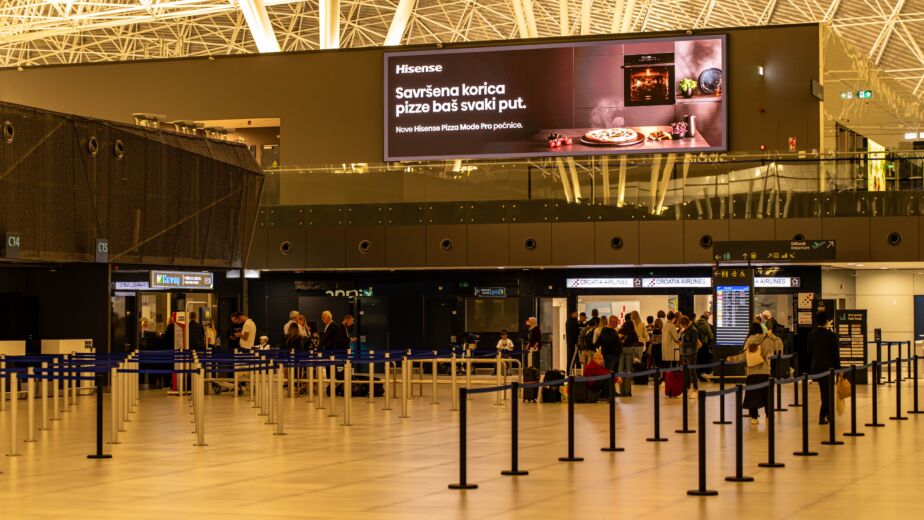
Dubai International Airport, DXB, is one of the world’s busiest international airports, making it a uniquely valuable OOH environment for brands targeting international travellers, high income residents, and business decision makers. Dwell times at the airport often extend to hours, and the audience profile, particularly in Terminal 3 serving Emirates, skews toward premium demographics.
Airport OOH formats include terminal digital screens, static lightboxes, baggage claim advertising, aerobridge branding, lounge placements, and trolley and floor graphic branding. For luxury brands, real estate developers, financial services, and travel related businesses, airport advertising offers access to a concentration of high value prospects that is hard to match elsewhere.
Indoor Screens in Non Retail Venues
Beyond malls, Dubai’s indoor advertising landscape extends into gyms, hospitals, hotels, office buildings, cinemas, and residential community centres. Each of these environments offers a defined, captive audience in a specific mindset.
Gym screens reach a fitness conscious, lifestyle oriented audience repeatedly throughout their weekly routine. Hospital and clinic screens reach patients and visitors with extended dwell times and an attentive mindset. Hotel screens reach tourists and business travellers at the moment they are most open to discovery. Office tower screens deliver concentrated access to working professionals and business decision makers. These niche environments are among the most underused OOH options available to brands in Dubai, and often deliver strong ROI precisely because the competition inside them is lower.
Transit and Street Level Formats
Bus shelter advertising, taxi branding, and street level panels complete Dubai’s OOH landscape. These formats are particularly effective for hyperlocal reach, building presence in specific communities and along specific routes at relatively accessible cost points. Taxi advertising in particular provides mobile visibility across the city, following the routes of one of Dubai’s most commonly used transport options.
Building Wraps and Construction Hoardings
Large format building wraps and construction site hoardings are a staple of Dubai’s advertising environment, given the city’s continuous development. These formats offer massive visual scale at a range of price points depending on size and location, and work well for brand launches, major campaigns, and any situation where sheer physical presence and scale is the goal.
OOH Advertising Dubai Cost Breakdown 2026
Here is a realistic unified cost comparison across Dubai’s main OOH formats.
| Format | Typical Monthly Cost Range (AED) | Best For |
|---|---|---|
| Sheikh Zayed Road Digital Billboard | 225,000 to 1,000,000+ | Maximum prestige, citywide reach |
| Sheikh Zayed Road Static Billboard | 200,000 to 600,000 | Brand presence, full exclusivity |
| Al Khail Road or Business Bay Billboard | 60,000 to 200,000 | Strong central reach, accessible premium |
| Community Road Static Panel | 15,000 to 50,000 | Neighbourhood awareness, local businesses |
| Mall Digital Screen, Flagship Mall | 90,000 to 200,000+ | Purchase intent audience, retail brands |
| Mall Digital Screen, Mid Tier Mall | 20,000 to 90,000 | Broad consumer reach, accessible budgets |
| Metro Station Digital Screen | From 12,000 per month | Commuter frequency, residential audiences |
| Full Metro Train Wrap | Custom pricing | Maximum transit network visibility |
| Airport Terminal Digital Screen (DXB) | 90,000 to 250,000+ | Premium traveller audience |
| Airport Lounge or Aerobridge Branding | 25,000 to 150,000+ | Ultra premium demographic |
| Gym or Office Indoor Screen | 5,000 to 35,000 | Niche lifestyle or B2B audience |
| Hospital or Clinic Screen | 8,000 to 30,000 | Health focused, long dwell time |
| Bus Shelter Advertising | 5,000 to 20,000 | Street level, community reach |
| Taxi Branding | 3,000 to 15,000 | Mobile citywide, high frequency |
How to Choose the Right OOH Format for Your Brand
The most common mistake in OOH advertising is choosing a format based on budget or prestige rather than audience fit. A billboard on Sheikh Zayed Road is impressive, but if your customers live and work in Mirdif, it may deliver less value than a well placed community mall screen ten minutes from their front door.
The right starting question is not which format is best, it is who you most need to reach and where those people spend their time in Dubai.
For broad citywide brand awareness. Roadside billboards on major corridors, particularly Sheikh Zayed Road and Al Khail Road, combined with mall advertising at high footfall venues, deliver the widest possible reach across Dubai’s diverse population.
For reaching premium consumers and high net worth individuals. Airport advertising in premium terminal zones, combined with flagship mall placements and hotel indoor screens, concentrates your brand in the environments these consumers naturally occupy.
For building frequency with resident commuters. Metro advertising across relevant stations builds the kind of repeated exposure that compounds into strong brand recall over a campaign period, at a more accessible price point than premium roadside formats.
For contextual relevance and niche targeting. Indoor screens in gyms, clinics, hotels, and office buildings allow brands to place their message in an environment that is directly related to the product or service being advertised, creating relevance that broad formats cannot achieve.
For hyperlocal community presence. Street level panels, community mall screens, and taxi advertising reach specific neighbourhoods and catchment areas at accessible budgets, making them ideal for local businesses and community focused campaigns.
The Power of Multi Format OOH Campaigns
Some of the most effective OOH advertising strategies in Dubai are not built around a single format. They are built around a journey.
A campaign that places a brand on a billboard along a commuter’s morning route, then inside the metro station at their stop, then on a screen inside the mall they visit at the weekend, creates a presence that feels larger than any individual placement. The audience does not experience this as one ad in three locations. They experience it as a brand that is simply part of their city.
This cumulative effect, sometimes called environmental dominance, is one of the most powerful outcomes available in OOH advertising, and it tends to produce brand recall and recognition that significantly outperforms what the individual spend on each placement would suggest.
Multi format campaigns do not require enormous budgets. A community level combination of a neighbourhood billboard, a nearby metro station screen, and a community mall placement can achieve this layered presence at a very different price point than the equivalent strategy on premium citywide formats.
What Makes Dubai's OOH Landscape Uniquely Powerful
Dubai is an unusually OOH friendly city for reasons that go beyond the scale of its infrastructure. The combination of long commutes by car and metro, extreme weather that keeps residents inside air conditioned malls and transit systems for much of the year, a tourist economy that brings millions of visitors through high footfall environments, and a culture of aspirational spending creates an environment where OOH advertising lands with more impact than in many comparable cities.
Residents spend more time in malls per visit, more time in transit per journey, and more time in shared spaces per week than consumers in most other markets. Each of those moments is an OOH advertising opportunity, and brands that understand this geography of daily life in Dubai are the ones that build the strongest physical presence in the city.
Why The Screen Is Dubai's Most Trusted OOH Advertising Partner
Finding the right OOH option in Dubai is genuinely complicated. The market is large, the options are numerous, inventory is often not publicly listed, pricing varies dramatically based on relationships and negotiation, and the approval process can trip up brands that are not familiar with the regulatory requirements.
The Screen has spent years building expertise, relationships, and processes across Dubai’s entire OOH landscape. We work with clients who are placing their first outdoor campaign and clients who are managing complex multi format campaigns across a dozen environments simultaneously. We know which locations genuinely deliver and which ones look impressive on a media plan but underperform in practice.
More importantly, we do not recommend what is easiest to sell. We recommend what fits your brand, your audience, and your goals, even when that means suggesting a smaller, smarter combination of formats over a single headline placement.
When you work with The Screen, you get access to real inventory relationships across Dubai’s OOH market, a team that handles creative specifications and regulatory approvals, and an advisor who tells you the truth about where your budget will work hardest.
Frequently Asked Questions
What is OOH advertising and what does it include in Dubai?
OOH, or out of home advertising, refers to any paid advertising that reaches people outside their homes. In Dubai this includes roadside billboards and digital screens, mall advertising, metro station and train advertising, airport advertising, indoor screens in gyms, hotels, hospitals, and offices, bus shelter and taxi advertising, and building wraps and construction hoardings.
What is the most effective OOH advertising format in Dubai?
There is no single most effective format because effectiveness depends on the brand’s goal, audience, and budget. For broad awareness, roadside billboards on major corridors deliver the most reach. For premium audiences, airport and flagship mall formats are strongest. For frequency with resident audiences, metro advertising typically delivers the best value.
How much does OOH advertising cost in Dubai?
OOH advertising costs in Dubai range from around AED 3,000 per month for taxi branding to over AED 1 million per month for premium digital billboard placements on Sheikh Zayed Road. Most meaningful brand campaigns fall between AED 20,000 and AED 200,000 per month depending on format and location.
What is the minimum budget needed for OOH advertising in Dubai?
Meaningful OOH advertising can begin from around AED 5,000 to AED 15,000 per month for community level formats such as gym or clinic screens, community mall placements, or street level panels. Premium formats typically require a larger minimum investment.
Which OOH format reaches the most people in Dubai?
Roadside billboards on major corridors like Sheikh Zayed Road and Al Khail Road reach the highest volume of people in terms of daily traffic. However, total reach does not always translate to the best result. Formats with longer dwell times, such as mall screens and metro advertising, often deliver stronger recall despite lower headline impression numbers.