Most advertising tries to influence a decision that’s days or weeks away. Retail screen advertising does something rarer: it reaches a shopper seconds before they decide what to put in their basket. That proximity to the actual moment of purchase is the entire value proposition of in-store advertising, and it’s why retail brands treat it differently from awareness-focused channels like social media or outdoor billboards.
Why Timing Beats Reach in Retail Advertising
A billboard or social ad has to survive being remembered until the shopper eventually reaches a store. An in-store screen doesn’t need memory to work — the shopper is already there, wallet effectively open, comparing options in real time. This is why in-store advertising tends to punch above its reach numbers: it’s not competing for recall days later, only for attention in the next few seconds.
Where In-Store Screens Perform Best
- New product launches — introducing something a shopper wouldn’t otherwise know to look for
- Impulse and add-on categories — snacks, beauty, accessories, and other low-consideration purchases where seeing the ad can directly trigger a pickup
- Promotions and limited-time offers — creating urgency at the exact moment a shopper is deciding
- Brand comparison categories — where multiple similar products sit on the same shelf and a well-placed ad can tip the decision
- Cross-category suggestions — prompting a shopper to consider an adjacent product they weren’t actively looking for
Products that require significant research or consideration before purchase (large electronics, high-cost items) tend to benefit less from this format, since the decision usually isn’t made in-store in the first place.
Placement Is a Bigger Lever Than Most Brands Realise
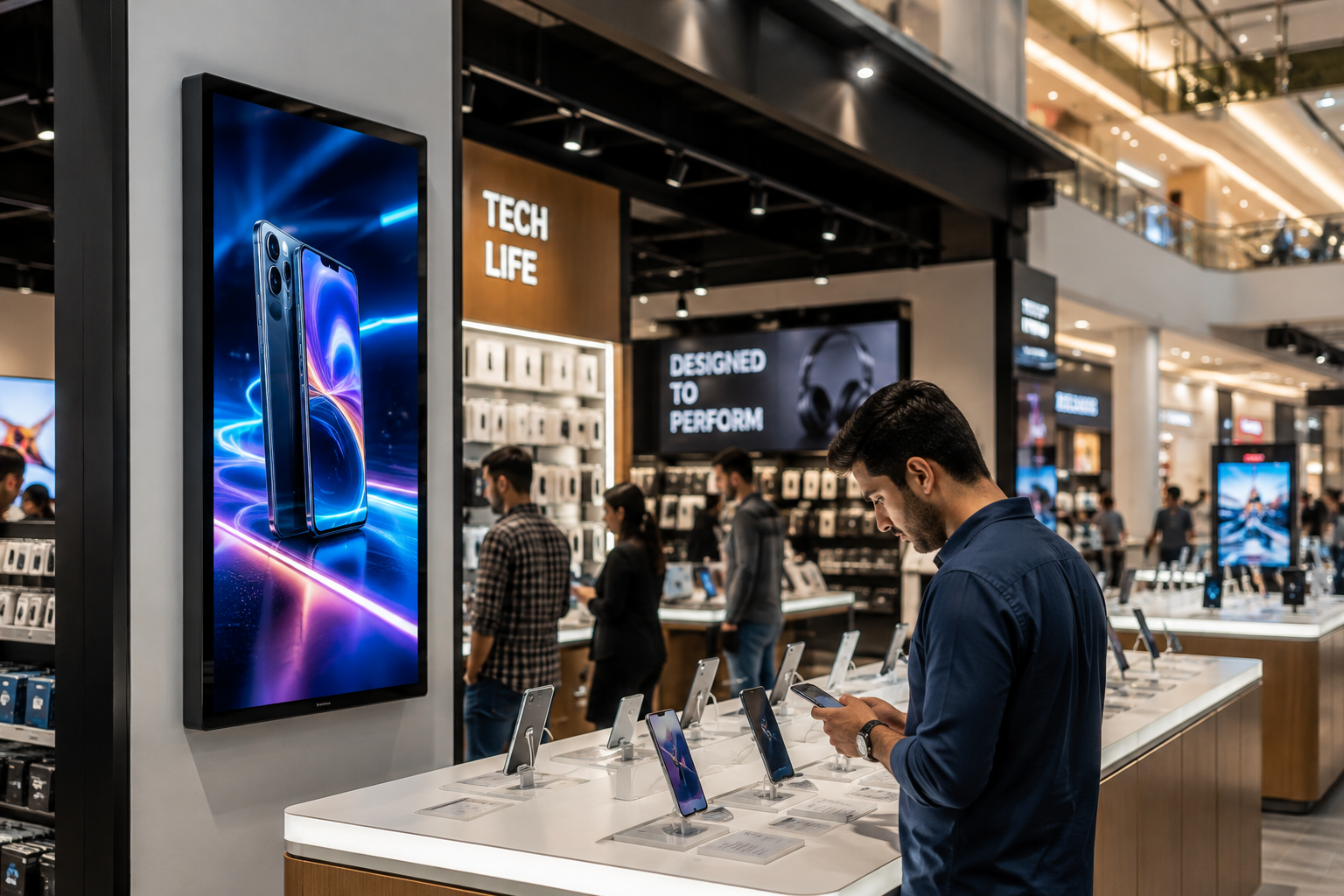
Where the screen sits inside the store changes what job it can do. A screen near the entrance functions more like a mall or outdoor ad — building initial awareness as shoppers arrive. A screen near the relevant product aisle can directly influence a comparison happening in real time. A screen near checkout works well for impulse and add-on categories, catching a decision in its final seconds. Matching placement to your product category matters more than simply securing “a screen in the store.”
Creative That Works at the Point of Sale
Point-of-sale creative benefits from being direct rather than aspirational — a clear product shot, a simple offer, and minimal copy tend to outperform brand-storytelling content in this specific context, because the shopper’s attention window is short and their mind is already on a practical decision. This is one environment where a straightforward, benefit-led message usually beats a cleverer, slower one.
Choosing the Right Retail Locations
Retail audiences vary enormously by store type and location — a high-footfall mall-anchor store behaves very differently from a neighbourhood convenience retailer. Before committing budget, it’s worth being specific about the store types, categories, and locations your campaign will run in, since a product’s natural shelf-neighbour category often matters more than overall store size. Reviewing how a broader digital screen advertising campaign is typically structured can help clarify which retail environments actually fit your product.
Getting Started
The most effective in-store test starts narrow: a specific product category, a handful of well-matched stores, and placement chosen to match how the purchase decision actually happens — near the shelf for comparison-driven categories, near checkout for impulse ones. Building a retail advertising campaign around that logic gives a much clearer read than a broad, unfocused rollout.
FAQs
1. Does in-store screen advertising work for high-consideration purchases like electronics? Less reliably than for impulse or lower-consideration categories, since those decisions are usually made well before the shopper enters the store.
2. Where should my ad be placed inside the store for the best impact? It depends on your product. Entrance placements suit general awareness, aisle placements suit comparison-driven categories, and checkout placements suit impulse or add-on purchases.
3. Is retail screen advertising better than a mall advertising placement? They serve different jobs. Mall advertising builds broader awareness across shoppers passing through; in-store retail screens influence a specific purchase decision already underway.
4. What kind of creative works best at the point of sale? Direct, benefit-led creative with a clear product shot and simple message tends to outperform aspirational or story-driven content in this specific context.
5. Can I run a campaign in specific stores or store types only? Generally yes — campaigns are usually built around specific store types, categories, and locations rather than a blanket retail network.
Want to influence the decision at the actual point of sale? Talk to our team about matching your product category to the right stores and screen placement.