Why DOOH Advertising Has Become the Most Powerful Branding Channel in Dubai
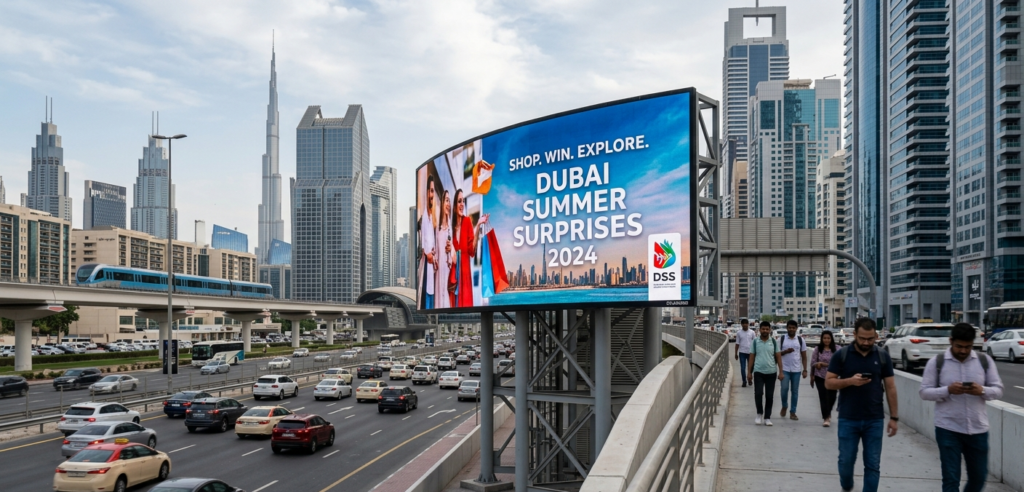
Walk through Downtown Dubai on any given morning. Look up at Sheikh Zayed Road. Step into The Dubai Mall and watch the atrium panels rotate through brands you recognise immediately. Take the Metro from Business Bay to DIFC and notice how many times a single campaign appears before you even reach your destination.
That is not coincidence. That is strategic media dominance.
Digital out of home advertising, DOOH, has become one of the fastest growing branding channels in the UAE. Dubai continues to experience strong population growth, making it one of the most attractive high-income advertising ecosystems in the region. Alongside this, millions of international visitors arrive every year, creating continuous exposure opportunities across retail, transport, and hospitality environments.
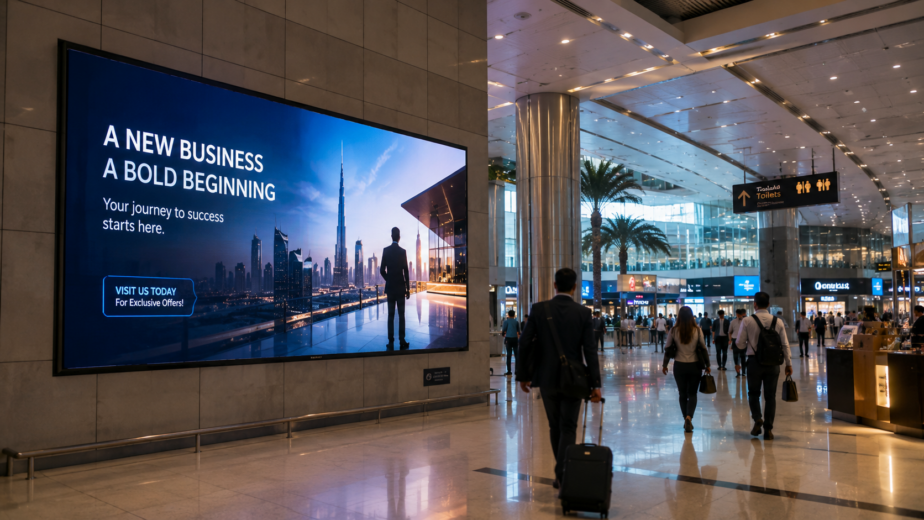
Dubai International Airport remains one of the world’s busiest international travel hubs, handling tens of millions of passengers annually, making it a premium environment for high-value brand visibility.
This is why leading brands are reallocating serious budgets into DOOH campaigns instead of relying only on digital ads.
What DOOH Advertising in Dubai Actually Means Today
DOOH in Dubai is not just digital billboards. It is a full ecosystem of controlled, high-impact advertising environments governed by multiple authorities and private operators.
The Roads and Transport Authority (RTA) manages roadside digital billboards and the Metro digital screen network across 53 stations on the Red and Green lines. Dubai Municipality oversees outdoor advertising compliance across the city. TECOM Group controls digital screens across business and media districts like Dubai Media City and Dubai Internet City.
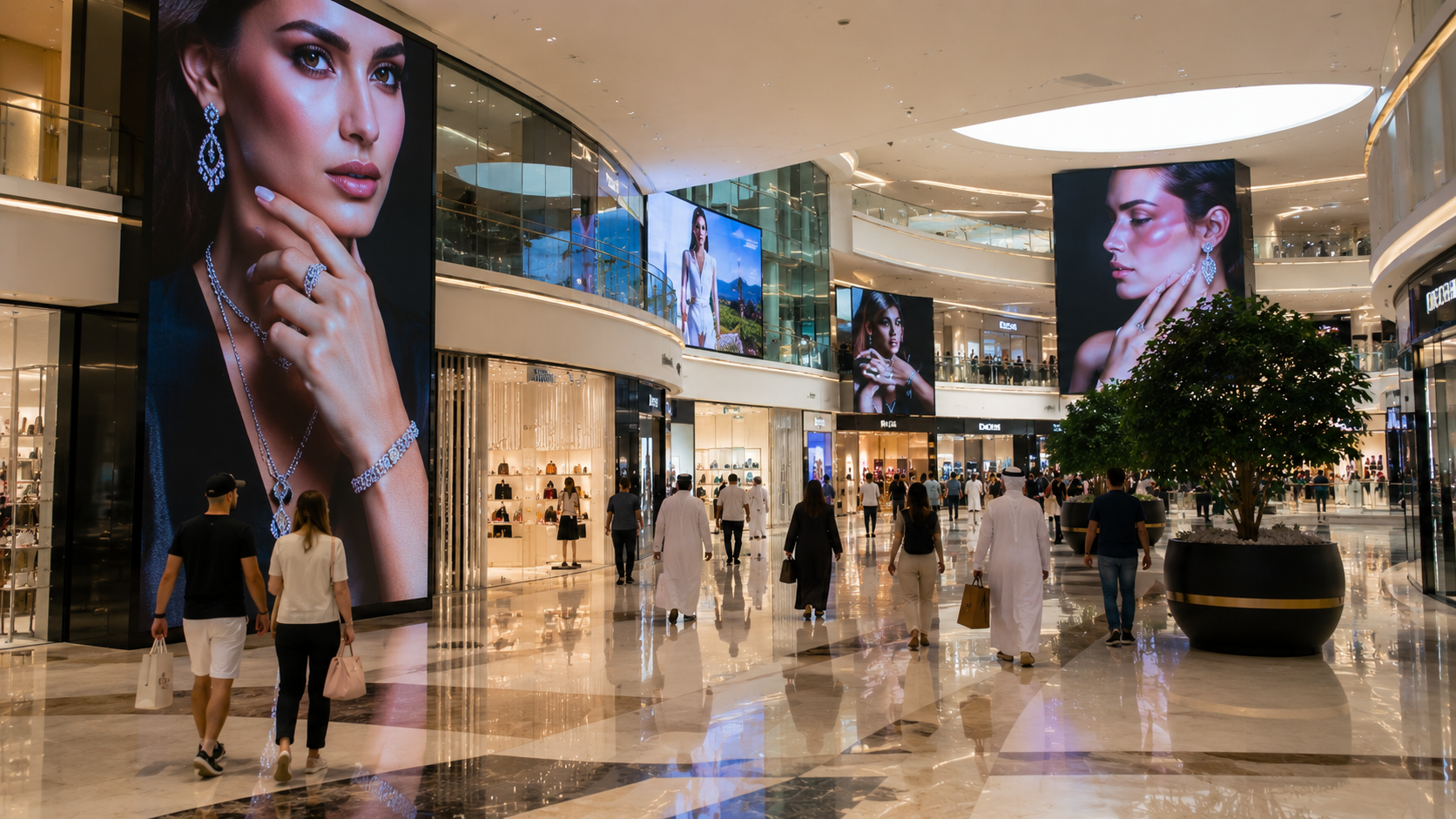
Premium mall environments are managed by major retail operators including Emaar Malls and Majid Al Futtaim, covering iconic destinations like The Dubai Mall and Mall of the Emirates.
Airport advertising environments are controlled by Dubai International Airport, one of the highest footfall international travel hubs in the world.
Understanding who controls what inventory is critical because it directly impacts pricing, approvals, and campaign execution speed.
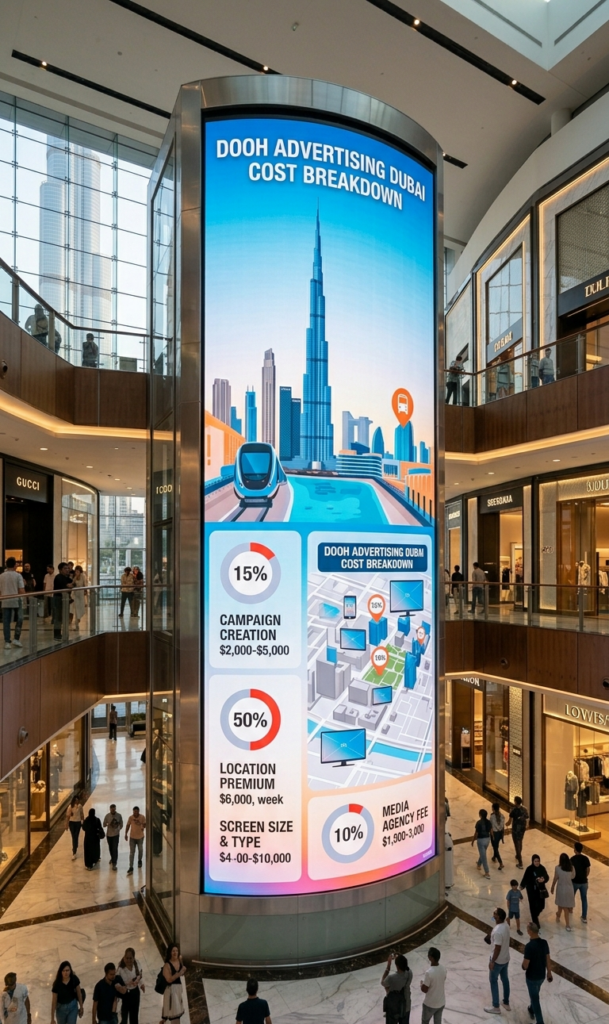
DOOH Advertising Dubai: Full Cost Breakdown by Format
Pricing across Dubai’s DOOH network depends on location quality, audience density, screen size, and share of voice.
Roadside Digital Billboards
| Location Tier | Share of Voice | Monthly Rate (AED) |
|---|---|---|
| Sheikh Zayed Road, Tier 1 | 25 percent loop | 80,000 to 150,000 |
| Al Khail Road, Emirates Road, Tier 2 | 25 percent loop | 35,000 to 75,000 |
| Full loop exclusivity | 100 percent ownership | 250,000 and above |
Mall Digital Screens
| Environment | Placement | Monthly Rate (AED) |
|---|---|---|
| Flagship malls | Atrium and corridor panels | 40,000 to 80,000 |
| Premium positions | Entrances and food courts | 100,000 and above |
| Community malls | Standard digital panels | 15,000 to 35,000 |
Dubai Metro Digital Network
| Station Tier | Campaign Type | Rate (AED) |
|---|---|---|
| Tier 1 stations | Full share of voice | 40,000 to 80,000 |
| Mid-tier stations | Standard placement | 10,000 to 25,000 |
| Entry level stations | Basic digital panels | 5,000 to 10,000 |
Airport and Specialty Formats
| Format | Duration | Rate (AED) |
|---|---|---|
| Airport landside | 2 weeks | 50,000 to 120,000 |
| Airport airside premium zones | 2 weeks | 120,000 and above |
| Petrol station networks | 4 weeks | 10,000 to 30,000 |
| Corporate lobby screens | Monthly | 8,000 to 20,000 |
The Hidden Costs That Catch First-Time Advertisers Off Guard
Creative Production Requirements
DOOH is not static advertising. It requires motion design, high resolution formatting, and platform-specific adaptation. Brands typically invest additional budget for creative production to ensure maximum screen impact.
RTA Approval and Permits
Roadside digital campaigns require approval from regulatory authorities, which can extend timelines and require compliance checks before launch.
Seasonal Demand Pressure
Major events such as Ramadan, Eid seasons, Dubai Shopping Festival, and global exhibitions significantly increase demand for premium placements, often impacting availability and pricing.
Installation and Physical Execution Costs
Certain formats such as Metro or structural branding require certified installation and removal processes, which are separate from media buying costs.
Industries That Benefit Most From DOOH Advertising in Dubai
Real Estate
Developers use high-frequency Metro and roadside placements to build mass awareness during project launches and off-plan campaigns.
Retail Brands
Shopping mall advertising influences customers at the exact point of purchase intent, increasing conversion probability.
Automotive Industry
Roadside billboards on Sheikh Zayed Road and major highways deliver strong visibility for vehicle-focused campaigns.
Financial Services
Corporate district screens in DIFC and Business Bay target high-income decision-makers during daily routines.
Hospitality and Tourism
Airport advertising ensures global exposure to high-spending international travelers.
How to Plan a High Performing DOOH Campaign in Dubai
The brands getting the best results from Dubai DOOH follow a planning framework that most first-time advertisers skip entirely.
Define the audience before the location. Every station, mall corridor, and road environment in Dubai serves a distinct demographic. Your plan should start from a verified audience description and work backwards to screen selection, not the other way around.
Establish a minimum viable frequency. UAE industry data consistently shows purchase intent requires three to seven brand exposures. Your campaign must achieve sufficient loop share, duration, and location density to deliver that frequency before it ends. Campaigns under four weeks at standard rotation rarely clear this threshold.
Integrate with digital channels from day one. DOOH awareness lifts digital performance. Brands that retarget audiences based on geographic proximity to their screen locations report lower cost per acquisition across the combined campaign than either channel delivers alone.
Allow realistic lead time. A fully produced, RTA-approved Dubai DOOH campaign requires three to five weeks from brief to live. Brief your partner at least six weeks before your intended launch date.
The Future of DOOH Advertising in Dubai
Dubai’s DOOH ecosystem is evolving rapidly.
Programmatic DOOH buying is expanding, allowing real-time audience-based media purchasing. Dynamic creative optimization is becoming standard, enabling brands to change messaging based on time, weather, or audience behavior.
Measurement systems are also improving, linking screen exposure to digital engagement and real-world conversions more accurately than ever before.
What Successful Brands Do Differently in Dubai DOOH
After managing hundreds of DOOH campaigns in Dubai, The Screen has identified the consistent differences between brands that treat this channel as a cost and those that treat it as a competitive advantage.
Successful brands brief for twelve months, not four weeks. DOOH equity builds cumulatively. The brand that consistently occupies a screen cluster over a full year earns exponentially greater audience recognition than one that appears for a month and disappears.
They invest in DOOH-specific creative, motion content built for the screen dimensions, dwell times, and viewing distances of each format, not repurposed social assets.
They measure what matters: brand recall uplift, branded search volume changes, and downstream conversion behaviour connected to exposure geography. The Screen builds these measurement frameworks into every campaign from the brief stage.
The ROI Case for DOOH Advertising in 2026
Digital out of home advertising in Dubai delivers strong upper funnel and mid funnel impact when executed correctly.
Brands typically observe increased branded search volume, improved store visits in targeted areas, and stronger overall brand awareness during active campaign windows.
Unlike performance-only channels, DOOH builds long-term visibility equity that compounds over time.
Frequently Asked Questions
What is DOOH advertising and how is it different from traditional billboards in Dubai?
DOOH stands for digital out of home advertising. Unlike static vinyl billboards, DOOH screens display motion content, rotate multiple advertisers in a timed loop, can be updated within hours, and in programmatic environments can serve audience-targeted creative dynamically. In Dubai, DOOH networks are operated by RTA, Dubai Airports, private mall groups, and independent screen owners, each with distinct inventory, pricing, and approval requirements.
How much does DOOH advertising cost in Dubai?
Entry-level DOOH campaigns in Dubai start from AED 5,000 for secondary Metro station placements over two weeks. Meaningful campaigns with sufficient reach and frequency typically require AED 40,000 to AED 80,000 for a four-week multi-format or Tier 1 station programme. Roadside digital billboard campaigns on Sheikh Zayed Road range from AED 80,000 to AED 150,000 per month for a 25 percent share of voice rotation.
Which Dubai locations deliver the highest ROI for DOOH advertising?
ROI is determined by audience match rather than location prestige. Sheikh Zayed Road delivers the highest mass reach for vehicle commuter audiences. Mall of the Emirates and The Dubai Mall deliver the strongest retail conversion proximity. DIFC and Business Bay corporate lobby screens deliver the highest B2B decision-maker concentration. Dubai International Airport delivers the highest income audience density in the UAE.
How long does it take to launch a DOOH campaign in Dubai?
Standard digital screen formats without RTA roadside permit requirements go live within five to ten business days of receiving production-ready creative. Roadside digital billboard campaigns requiring RTA content approval need three to five weeks from brief to live screen. The Screen manages the full approval and booking process for clients.
Can small and medium businesses afford DOOH advertising in Dubai?
Yes, with strategic format selection. Petrol station network campaigns, corporate lobby screens, and secondary Metro station placements offer meaningful market access from AED 10,000 to AED 30,000 per campaign. The Screen structures SME-appropriate DOOH plans that concentrate limited budgets on the highest-impact locations for the specific target audience rather than spreading investment across formats that require larger budgets to perform.